About This Site
Vision: Long ago a classmate remarked that social relationships are extremely easy for some people and extremely difficult for others. No one there could miss that they were easy for him – and very difficult for me.
Our interest is movements to build a better world by improving and developing population social skills. One advantage: this approach helps individuals get what they want personally (often including worldly success), while improving social life by reducing unnecessary conflict, and also helping those inclined to stay in the fight for a better world.
The training framework that worked for me was the "zone of proximal development" described by the Russian educator Lev Vygotsky (1896-1934). Vygotsky founded and ran an institute in Moscow for teaching children with disabilities. The zone of proximal development is the difference between what the student (child or adult) can do with guidance and other assistance, vs. what they can do on their own. Vygotsky taught that learning occurs in that zone.
Which is obvious. What's more important is getting away from the over-emphasis on standardized tests of what students can do alone - opening many practical training opportunities for skills development.
Since it’s hard to find teachers at scale, we settled for written descriptions of easy training exercises, or practices, that people can do on their own or with others. We learn about these practices from anywhere, and credit sources when we can. Some we created, although probably they are also out there somewhere in the world. (We recently learned about a movement in Bangladesh to improve children's social skills in school.)
This site is primarily a listing and summary of some social training practices that we recommend (sometimes with caution).
There is no authoritative list of recommended practices, certainly not this one. We encourage people to experiment, and tell others about successes they find. That could contribute to personal success and to a better world as well. This flexibility is how to build a movement in a world that's changing so fast.
To make this training universally available, the practices work through everyday life itself. So no money is required, no special education, privileges or meetings.
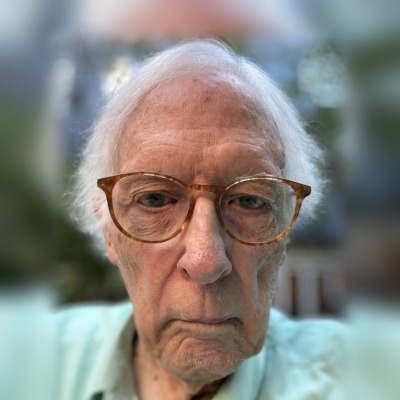
Author: John S. James founded AIDS Treatment News in 1986 and published it in San Francisco and then Philadelphia for 20 years; see "Underground Press Leads Way on AIDS Advice, New York Times, December 16, 1991, Page A16; available in New York Times archive (scroll down). Before that, he programmed computers for 20 years, working for organizations including the U.S. National Institutes of Health, Montgomery College, American Airlines, and Stanford Medical Center. He later published articles about the programming language Forth.
He has always been interested in a better world - especially in practical ways to get there.
He was in Timothy Leary's psychology class at Harvard, two years before Leary was famous.
On July 4th, 1965, he marched in an early gay rights demonstration: the first Reminder Day, at Independence Hall in Philadelphia.
He currently lives in Philadelphia.
History: This project developed from a lifelong interest that started with hearing Aldous Huxley's public talk, "Human Potentialities," 1961 at MIT in Cambridge, MA. In a short section at the end, Huxley suggested collecting effective training methods from cultures throughout history, for spiritual development. I caught the importance of training methods, but was more interested in using them for practical skills for personal and community survival and success, in an often-hostile world. There is a saying that by skillful means it is possible to live comfortably even in hell.
Contact: to reach the author, email jj at the .org domain (not the .com).
Comments: Instead of having comments on this site, we are looking for a good discussion forum, on that will work for the purpose here. We are considering Facebook groups, Bluesky, Discord, Reddit, Telegram, and others. Suggestions welcome; send them to the jj address in Contact, above. (We are NOT considering bulletin boards that run on PHP, due to serious security flaws in PHP recently uncovered by AI, flaws that nobody had noticed for decades.)
Privacy: We use AWSTATS for cumulative reports from the ISP's log files - how many visitors from each country for example. We don't use web beacons or other trackers. We make no effort to identify individual users, and do not share any user's information without their permission, unless required by law.
Money: This site is a personal project of the author. No one else is funding it.
We collect practices that cost no money at all, for several reasons.
- Charging even a penny excludes most people. They could afford the penny but may not have the right currency and an account to pay online. And charging significant money creates class distinctions right away.
- Typically a movement does not use money; an organization does (and may be affiliated with a movement). Our interest here is building a movement. Organizations can come later.
- A movement that doesn't use money does not go away because funding is cut off.
- Money causes endless problems worldwide. Just see the news. Almost always there are haves and have-nots, even in the midst of plenty. The resulting crime and violence degrade the quality of human life for rich and poor alike.
- Hopefully a movement focused on relationship training won't need money. Website expenses are minimal. In the U.S., a (small) majority of even homeless people have smartphones, so they can reach whatever is free online. For references to books, articles, and other sources, we try to find those that are free, online or otherwise. If the best reference we know is behind a paywall, we include it but keep looking for alternatives. Sometimes Reader Mode in Firefox can help.
We believe that commerce is good. But in today's corruption money is everything and the world keeps getting worse. What might be possible online without money? Not solving all problems but finding ways forward on some important opportunities.
Tech: This site should work well on any computer, phone, or other device that can view the web. If there are exceptions, we want to know about them (use Contact address above).
If you have a wide screen and want more white space to the left and right of the text, just expand your window. The text remains centered, with a maximum line length of about 74 characters.
While this site is Empathy7.ORG, Empathy7.COM also works; and is identical to the .ORG. (It's held in reserve in case the entire .ORG system gets sold off to private equity, which almost happened.)
Why is this site named Empathy7? A good domain name is short, memorable, and indicates what the site is about. That's hard to find these days. We were lucky that both "empathy7.org" and"empathy7.com" were available (capitalization doesn't matter). Seven is often considered a lucky number, with roots in both Eastern (7 chakras) and Western (7 days of creation, 7th heaven) spiritual and religious philosophies. We don't care about the numerology, but a story makes the number easier to remember; meanwhile, domain-name "brokers" who buy hundreds of useful names to sell some for thousands of dollars are taught to avoid numbers because they make the names harder to remember.
Empathy, the ability to understand the feelings of another person, is necessary but not sufficient; it does not necessarily include compassion. So empathy is not all we need for workable communities. A short domain name can't say everything.
Next Steps: Try some of the practices.
And check back here as we expand this project into online communities where interested people can meet each other.
